Stargazing forecast · worldwide
Is tonight clear enough to stargaze?
Astronight turns cloud, moonlight and darkness into one clear answer: how good tonight is, hour by hour, and the best window to go out — anywhere in the world.
Tonight's best window
The hours worth going out for, and what holds the rest of the night back.
Clouds by layer
Low, mid and high cloud separately — thin cirrus is not a lost night.
Anywhere on Earth
The same forecast in Hanoi, Santiago or Denver, in local time.
Tonight
Example night
Best window
22:40–03:10
Moon sets 22:15
Total cloud by hour
Low
2%
Mid
6%
High
18%
Held back by: thin high cloud after 03:00
Next nights
- Fri7423:10–04:30
- Sat38No clear spell
- Sun8821:50–05:05

- Denver0% cloud9h34 dark
- New York City0% cloud9h33 dark
- Los Angeles1% cloud9h40 dark
- London100% cloud9h10 dark
- Sydney51% cloud8h26 dark
- Tokyo0% cloud9h39 dark
- Hanoi79% cloud9h45 dark
- Ho Chi Minh City74% cloud9h43 dark
- Berlin67% cloud9h06 dark
- Santiago4% cloud8h29 dark
- Cape Town98% cloud8h27 dark
- Auckland41% cloud8h14 dark
- Istanbul0% cloud9h32 dark
- Mumbai1% cloud9h45 dark
- São Paulo93% cloud8h58 dark
- Mexico City98% cloud9h45 dark
- Seoul30% cloud9h38 dark
- Johannesburg0% cloud8h52 dark
- Jakarta13% cloud9h28 dark
- Taipei58% cloud9h45 dark
- Lima96% cloud9h20 dark
- Bogotá96% cloud9h39 dark
- Hong Kong37% cloud9h45 dark
- Rio de Janeiro19% cloud8h59 dark
- Singapore62% cloud9h36 dark
- Melbourne78% cloud8h10 dark
- Bangkok97% cloud9h44 dark
- Dubai0% cloud9h45 dark
- Busan45% cloud9h40 dark
- Madrid1% cloud9h33 dark
- Buenos Aires100% cloud8h24 dark
- Toronto19% cloud9h28 dark
- Brisbane13% cloud8h47 dark
- Osaka1% cloud9h40 dark
- Chicago73% cloud9h31 dark
- Hai Phong88% cloud9h45 dark
- Perth72% cloud8h33 dark
- Rome73% cloud9h30 dark
- Houston0% cloud9h43 dark
- Paris100% cloud9h17 dark
How it works
One question, answered in four looks
One number for tonight
A 0–100 sky score and the best window to go out — with the two reasons holding it back.
Then the evidence, hour by hour
Cloud by layer and by model, seeing, transparency, moonlight, wind, dew — one column per hour.
Where the sky is clear
A cloud and dark-sky map with a timeline, and a finder for the darkest clear spot within 100 km.
What is up there
The Moon, planets, ISS and Starlink passes, meteor showers, eclipses and aurora chances for your place.
The travel bureau
Worlds to visit
Every clear night is a trip. Check tonight’s sky, then go look up.
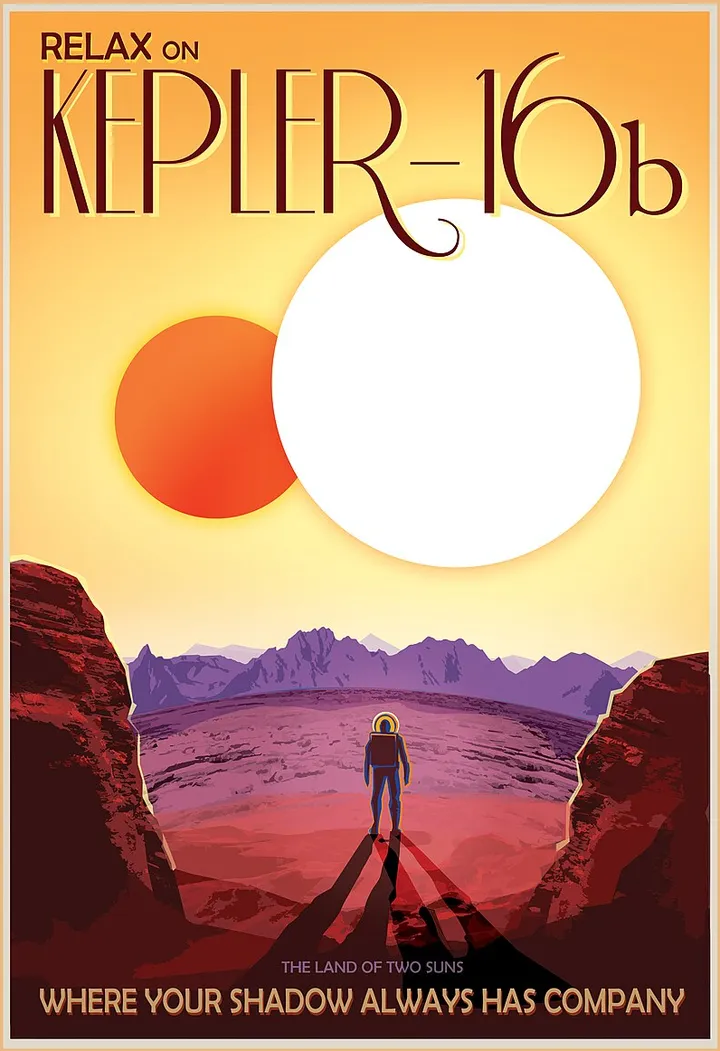
- Kepler-16bWhere your shadow always has company
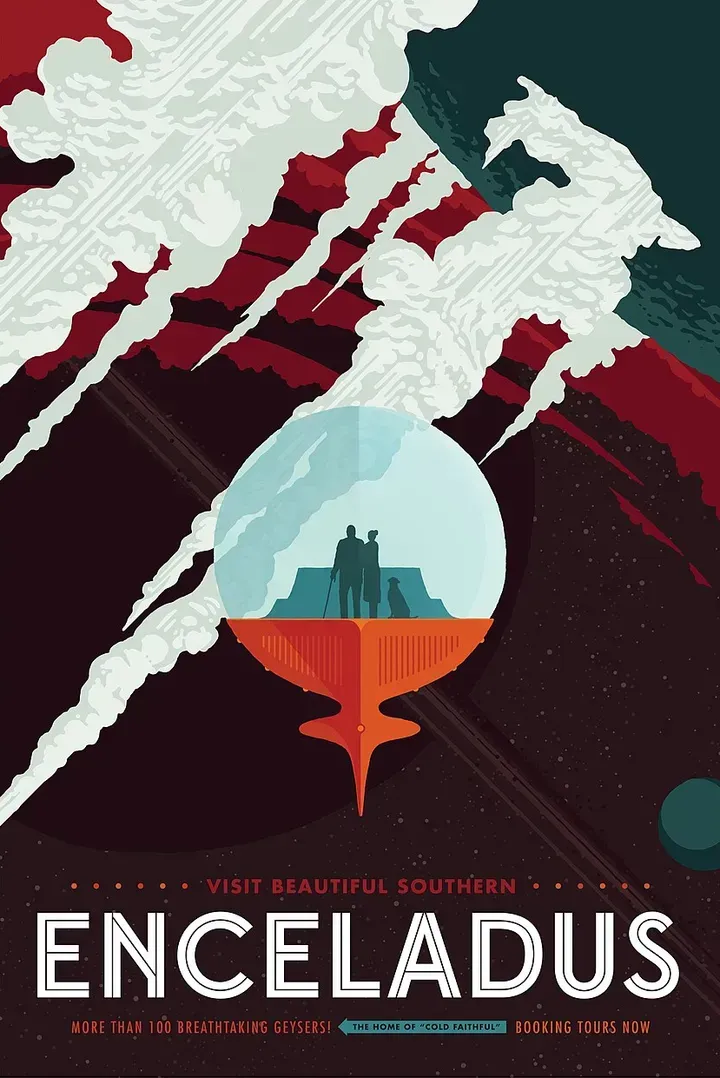
- EnceladusVisit beautiful southern Enceladus
- TitanRide the tides through the throat of Kraken
- EuropaDiscover life under the ice
- Kepler-186fWhere the grass is always redder
- The Grand TourA once-in-a-lifetime getaway
- MarsVisit the historic sites
- EarthYour oasis in space
- VenusSee you at the Cloud 9 observatory
- CeresQueen of the asteroid belt
- PSO J318.5-22Where the nightlife never ends
- 51 Pegasi bGreetings from your first exoplanet
- HD 40307gExperience the gravity of a super Earth
- Work the night shiftOn Mars’ moon
- Explorers wantedMars
- Surveyors wantedMap a new world
- Farmers wantedGrow food on Mars
- Technicians wantedKeep the signal alive
- Teach on MarsThe first class
- Some assembly requiredBuild the first base
Art: “Visions of the Future” posters, courtesy NASA/JPL-Caltech · “Mars Explorers Wanted” posters, NASA/KSC · space-colony paintings by Rick Guidice and Don Davis, NASA Ames (1975–76). Astronight is not affiliated with or endorsed by NASA or JPL.
Reads at a glance
Darker blue means a clearer sky
Every hour gets a cell, every cloud layer a row — the chart convention stargazers have read for decades, redrawn to be legible on a phone at 2 a.m.
Each cell carries its number, and the scale is always labelled, so the chart never depends on colour alone.
| Layer | 19 | 20 | 21 | 22 | 23 | 00 | 01 | 02 | 03 | 04 | 05 | 06 |
|---|---|---|---|---|---|---|---|---|---|---|---|---|
| Total | 72 | 55 | 30 | 12 | 5 | 3 | 2 | 4 | 8 | 15 | 28 | 40 |
| Low | 40 | 30 | 12 | 4 | 1 | 0 | 0 | 1 | 2 | 5 | 10 | 18 |
| Mid | 25 | 18 | 10 | 5 | 2 | 1 | 1 | 2 | 3 | 6 | 12 | 20 |
| High | 55 | 45 | 25 | 9 | 4 | 3 | 2 | 3 | 6 | 12 | 22 | 30 |
Everything that decides a night, in one place
Most weather apps tell you if it will rain. Stargazers need to know if the sky will be dark, clear and steady — and when.
Tonight score & best window
An hourly 0–100 score for the sky, and the longest good stretch of the night, with the two reasons that hold it back — "Moon 94% up until 01:10", "high cloud after 03:00".
Clouds by layer
Low, mid and high cloud separately. Thin high cirrus dims galaxies; low stratus hides everything. A single cloud % can't tell you which night you're getting.
Seeing & transparency
How steady and how clean the air is — the difference between a sharp Jupiter and a boiling one. From Environment Canada's model in North America; a worldwide beta elsewhere.
Moon & darkness
Moonrise, moonset and phase, plus civil, nautical and astronomical twilight, so you know exactly when the sky is truly dark and moon-free.
Planets tonight
Which planets clear the horizon during the dark hours, how high they climb, and where to look.
Global coverage
Many astronomy forecasts only cover North America and parts of Europe. Astronight works in Hanoi as well as it does in Denver.
Built for everywhere the sky is
Astronight's forecasts are built on global weather models, so every location gets the same forecast — from Santiago to Sapporo, Cape Town to Chiang Mai.
The city pages on this site are the proof: each one is computed for its own coordinates and time zone, with the cloud forecast refreshed every hour.
- Denver · 0% cloud
- New York City · 0% cloud
- Los Angeles · 1% cloud
- London · 100% cloud
- Sydney · 51% cloud
- Tokyo · 0% cloud
- Hanoi · 79% cloud
- Ho Chi Minh City · 74% cloud
- Berlin · 67% cloud
- Santiago · 4% cloud
- Cape Town · 98% cloud
- Auckland · 41% cloud
- Istanbul · 0% cloud
- Mumbai · 1% cloud
- São Paulo · 93% cloud
- Mexico City · 98% cloud
- Seoul · 30% cloud
- Johannesburg · 0% cloud
- Jakarta · 13% cloud
- Taipei · 58% cloud
- Lima · 96% cloud
- Bogotá · 96% cloud
- Hong Kong · 37% cloud
- Rio de Janeiro · 19% cloud
- Singapore · 62% cloud
- Melbourne · 78% cloud
- Bangkok · 97% cloud
- Dubai · 0% cloud
- Busan · 45% cloud
- Madrid · 1% cloud
- Buenos Aires · 100% cloud
- Toronto · 19% cloud
- Brisbane · 13% cloud
- Osaka · 1% cloud
- Chicago · 73% cloud
- Hai Phong · 88% cloud
- Perth · 72% cloud
- Rome · 73% cloud
- Houston · 0% cloud
- Paris · 100% cloud
Tonight's sky in popular cities
Free observing tools
Where the numbers come from
- MET NorwayCC BY 4.0
Hourly cloud (low/mid/high), temperature, dew point and wind
- astronomy-engineMIT
Sun, Moon and planet positions, twilight, moon phases
- GeoNamesCC BY 4.0
City coordinates, elevation and time zones
Questions
What is Astronight?
Astronight is a free stargazing forecast from ra2lab. For any place on Earth it turns cloud, moonlight and darkness into one answer: how good tonight is, hour by hour, and the best window to go out. It combines ECMWF, GFS and MET Norway cloud forecasts with darkness, Moon and planet times. The web app is live at astronight.app, the Android app is on Google Play, and the iPhone app is in development.
What is astronomical darkness?
Astronomical darkness is the part of the night when the Sun is more than 18° below the horizon, so sunlight no longer brightens the sky at all. Before it come civil twilight (Sun down to −6°) and nautical twilight (down to −12°), when faint galaxies and nebulae are still washed out. At high latitudes in summer, astronomical darkness may never arrive.
Why split cloud into low, mid and high?
Low, mid and high cloud affect stargazing differently. Low cloud such as stratus and fog blocks the sky completely, and mid-level cloud usually does too. High, thin cirrus only dims the sky, so planets and bright stars often still show through it. A single "60% cloud" figure hides which layer you are getting, which is why Astronight shows each layer separately.
What are seeing and transparency?
Seeing measures how steady the atmosphere is: poor seeing makes stars twinkle hard and blurs planets and the Moon at high magnification, which matters most through a telescope. Transparency measures how clear the air is of haze, humidity, dust and smoke: poor transparency hides faint galaxies and the Milky Way even under a cloudless sky.
Does the Moon ruin stargazing?
A bright Moon washes out faint deep-sky objects such as galaxies, nebulae and the Milky Way, but it is ideal for observing the Moon itself, planets and double stars. For dark-sky targets, plan around the week of new moon, or wait for the hours after the Moon sets. Astronight shows moonrise, moonset and the moon-free dark time for every night.
When will the app be available?
The Android app is out now on Google Play; the iPhone app is in development. The app adds clear-sky alerts, a home-screen widget and a red night-vision mode. Everything on this website is free and live now: the live forecast for any location, the cloud map, the night-sky planner, city forecasts, the Moon phase calendar and the telescope field-of-view calculator.
Astronight for iPhone and Android
Clear-sky alerts, a home-screen widget and red night-vision mode — tonight’s forecast in your pocket.